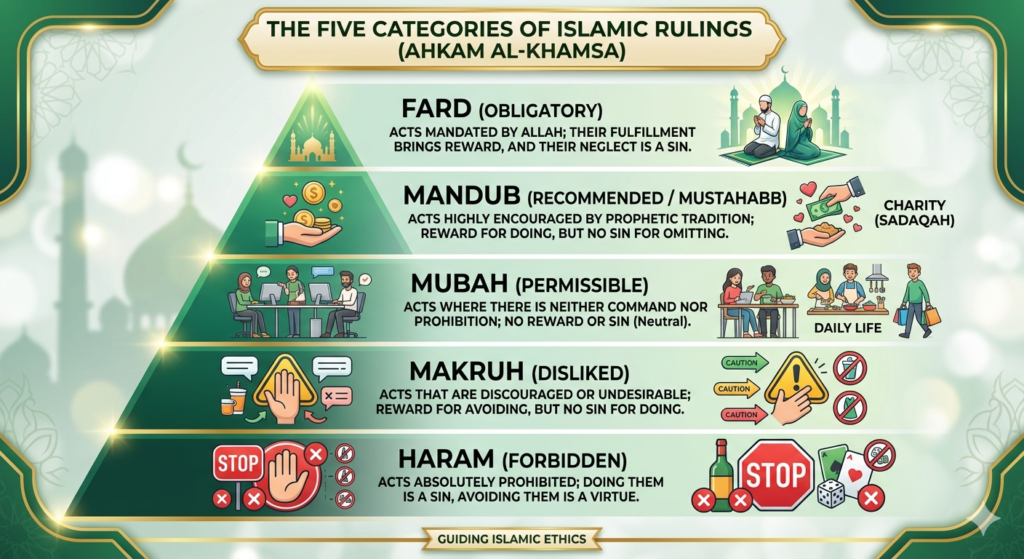
The Five Islamic Hukums Explained
🟢 Fard / Wajib — Obligatory
These are actions that every Muslim is required to perform. Leaving them is a sin; fulfilling them is an act of worship rewarded by Allah.
Examples:
- Praying the five daily prayers (Salah)
- Fasting in Ramadan
- Paying Zakat (if eligible)
- Performing Hajj (once in a lifetime, if able)
- Obeying one’s parents in permissible matters
Key Rule: If you do it → reward. If you leave it → sin.
🔵 Mandub / Mustahabb — Recommended (Sunnah)
These are actions that are encouraged but not obligatory. Performing them earns reward, but leaving them is not a sin.
Examples:
- Praying Sunnah prayers before and after Fard
- Saying Bismillah before eating
- Using a miswak (tooth stick)
- Giving voluntary charity (Sadaqah)
- Visiting the sick
Key Rule: If you do it → reward. If you leave it → no sin.
This category is the heart of Ihsan — going beyond the minimum to live a life of excellence.
⚪ Mubah — Permissible (Neutral)
These are actions that are neither encouraged nor discouraged by Islamic law. They carry no religious reward or punishment on their own.
Examples:
- Eating rice or bread
- Wearing any permissible color
- Taking a walk in the park
- Choosing a profession (in a halal field)
Key Rule: No reward, no sin — but intention can transform Mubah into worship.
This is an important point: even a neutral act becomes an act of worship when done with the right niyyah (intention). Eating food to sustain your body so you can worship Allah? That’s now rewarded.
🟡 Makruh — Disliked / Discouraged
These are actions that are not forbidden but are discouraged in Islamic law. Avoiding them is praised; doing them is not sinful but is frowned upon.
Examples:
- Eating with the left hand (without necessity)
- Wasting food or water
- Talking unnecessarily during the Adhan
- Wearing clothing inside-out
- Delaying prayer until the last possible moment
Key Rule: If you avoid it → reward. If you do it → no sin, but it’s better not to.
Makruh is often misunderstood. Many people treat disliked actions as if they are outright haram — this can lead to unnecessary hardship or judging others unfairly.
🔴 Haram — Forbidden
These are actions that are strictly prohibited in Islamic law. Committing them is a sin that requires sincere repentance (Tawbah).
Examples:
- Consuming pork or alcohol
- Engaging in Riba (interest/usury)
- Backbiting and slander (Gheebah and Buhtan)
- Zina (fornication/adultery)
- Theft, bribery, and oppression
- Shirk (associating partners with Allah)
Key Rule: If you avoid it for the sake of Allah → reward. If you do it → sin.
Important nuance: In cases of genuine necessity (Darurah), some haram things may become temporarily permissible. For example, eating pork to survive starvation when no other food is available is permitted — but only to the extent of necessity.