
“Take benefit of five before five: your youth before…
Introduction Every year, millions of Muslims around the world fulfil…
Education is no longer limited to physical classrooms. With technology…
Why enrolling your child in a Quran learning online platform…

Creating a Quran-friendly home environment is one of the greatest gifts parents in India, UAE, Saudi Arabia, Qatar, Oman, Kuwait, and Bahrain can give their families. A home that resonates with the words of Allah nurtures faith (Iman), builds strong character, and instills lifelong love for the Quran—especially in children. However, building such an environment does not require perfection; rather, it requires intention, consistency, and sincerity.
Below are practical and meaningful steps to transform your home into a place where the Quran is lived, loved, and practiced daily.
First and foremost, everything in Islam begins with intention. When parents sincerely intend to bring the Quran into their homes whether they live in India or the GCC.
Children naturally follow when they see parents valuing the Quran beyond formal lessons. Allah places barakah (blessings) in their efforts.
Moreover, when children see their parents valuing the Quran—not just as a book, but as guidance—they naturally learn to respect and follow it. Even small actions done consistently can create powerful spiritual impact.
Related Reading:
Why Quran Learning Is Important for a Child’s Character
Secondly, keep the Quran physically present in your home. Place copies of the Quran in areas where family gathers, such as the living room or prayer space.
In addition, having children’s Qurans with translations, colorful fonts, or tajweed rules helps younger learners feel connected. When the Quran is visible, it gently reminds the heart to return to Allah.
Equally important is creating a simple and achievable Quran routine. This does not have to be long; even 10–15 minutes daily can make a difference.
For example:
Recite a few verses after Fajr or Maghrib
Listen to Quran recitation during breakfast
Read together before bedtime
As a result, the Quran becomes part of daily life rather than an occasional activity. This routine fits well with school schedules in India and work timings in GCC countries.
Explore Online Quran Learning for Children in India & GCC
Children learn more from what they see than what they are told. Therefore, parents should actively engage with the Quran themselves.
When children notice their parents reciting, reflecting, and acting upon Quranic teachings, they naturally imitate them. Over time, this practice develops love and respect for the Book of Allah.This practice is especially important for families living abroad in the Gulf, where maintaining Islamic identity is a priority.
Furthermore, playing Quran recitation softly in the background helps fill the home with peace and tranquility. Whether during chores, homework, or quiet time, Quran audio transforms the environment spiritually.
This not only improves pronunciation and familiarity but also calms hearts and reduces stress within the household.
In addition to recitation, teaching the proper manners of handling the Quran is essential. Children should learn:
Performing wudu before touching the Quran
Handling it respectfully
Listening quietly when it is being recited
As a result, they understand that the Quran is not just reading material but sacred guidance from Allah.
Another effective step is linking Quranic values to everyday actions. For instance:
Relate kindness to verses about mercy
Discuss honesty using Quranic examples
Encourage patience through prophetic stories
This approach helps children understand that the Quran is practical and relevant—not distant or abstract.
Finally, structured learning brings consistency and correct understanding. With expert guidance, children gain proper tajweed, memorization skills, and comprehension.
MeeM Academia, as a trusted online Islamic institution, provides:
Certified Quran tutors
Child-friendly teaching methods
Flexible online schedules
Strong focus on tajweed, understanding, and character building
Consequently, families receive professional support while maintaining a Quran-centered home.
In conclusion, creating a Quran-friendly home environment is a journey, not a destination. With sincere effort, patience, and reliance on Allah, every home can become a place of light, peace, and guidance.
At MeeM Academia, we are honored to support families in nurturing homes where the Quran is not only read—but lived through Quran Learning Courses.
View Our Quran Learning Courses
Book a Free Quran Demo Class
Register for Online Quran Classes
“Indeed, this Qur’an guides to that which is most upright.” (Qur’an 17:9)
A Quran-friendly home environment is one where the Quran is read, listened to, respected, and practiced daily. In such homes, Islamic values are actively reflected in behavior, conversations, and routines. As a result, children grow up seeing the Quran as guidance for life—not just a book to read.
No, you do not need to be a scholar. In fact, sincerity and consistency matter more than advanced knowledge. Even simple daily Quran recitation, listening to tafsir, or discussing short verses can help build a strong Quranic atmosphere at home.
Ideally, children should spend at least 10–20 minutes daily with the Quran. However, quality matters more than quantity. Short, consistent sessions—such as reading, memorizing, or listening—are far more effective than long, irregular ones.
Parents can encourage love for the Quran by leading by example, praising effort rather than perfection, and making learning enjoyable. Additionally, using stories, reflections, and gentle reminders helps children associate the Quran with positivity and warmth.
Quran audio plays an essential role in shaping a peaceful environment. Listening to Quran recitation improves pronunciation, strengthens memorization, and brings calmness into the home. Moreover, it helps children become familiar with correct recitation even when they are not actively studying.
Busy parents can integrate the Quran into existing routines. For example, listening to the Quran during meals, reciting together after salah, or using online Quran classes can make learning manageable. As a result, Quran study becomes part of everyday life rather than an added burden.
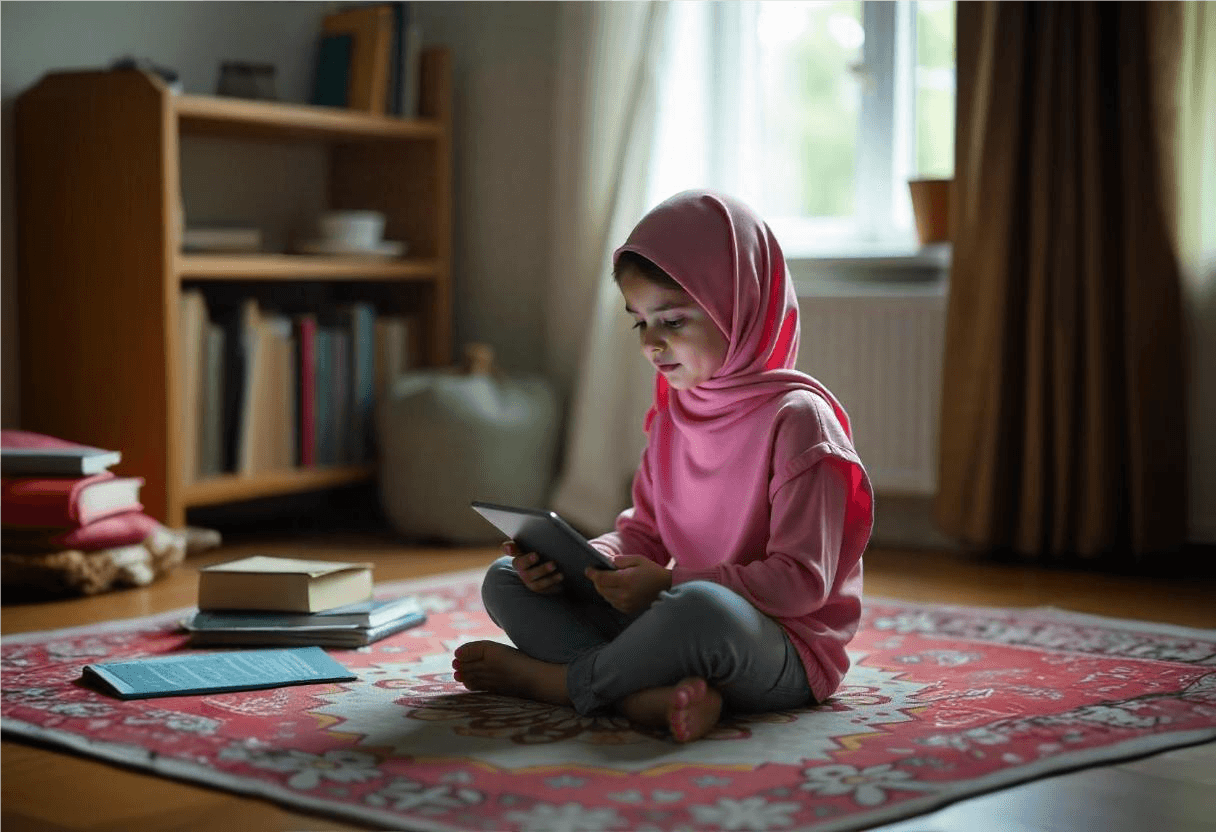
Creating a Quran-friendly home environment helps children develop strong faith, good character, and emotional balance. For families in India and GCC countries, online Quran learning makes it easy to build daily Quran habits at home through short routines, positive role-modeling, and guided virtual madrasa classes with certified tutors.
©2024. All rights reserved by MeeM Edtech Private Limited