


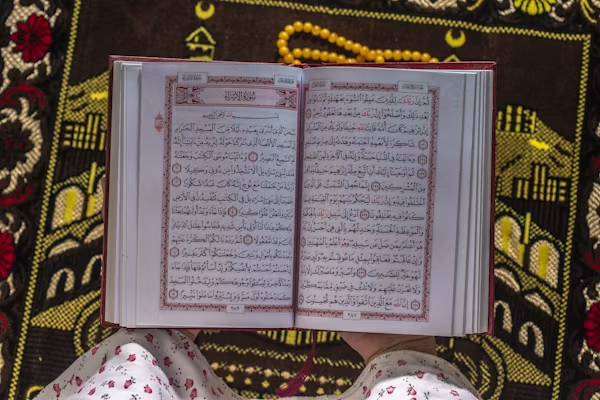
Opening the Holy Quran and understanding its words directly in Arabic is a dream for millions of Muslims and new reverts around the world. Yet, many beginners feel intimidated before they even start. You might wonder: Do I need to become fluent in conversational Arabic first? Will it take years to understand the verses? What if my pronunciation isn’t accurate?
The truth is encouraging: Quranic Arabic is distinct from modern spoken dialects, and you do not need to memorize thousands of everyday conversational words to understand the message of the Quran. With a structured approach, anyone can go from learning the alphabet to comprehending key verses. Here is how to begin your journey step by step.
5 Practical Steps to Learn Quranic Arabic
1. Master the Alphabet with Noorani Qaida
Everything starts with phonetics. Before diving into full sentences, learn letter shapes, vowel marks (Harakat—Fathah, Kasrah, Dammah), and how letters connect. Starting with a structured book like Noorani Qaida builds strong muscle memory.
2. Practice Basic Tajweed Rules Early
Pronouncing letters from their correct throat and tongue articulation points (Makharij) ensures you don’t change the meanings of words. Focus on foundational rules first: Ghunnah, Qalqalah, and clear letter distinction (e.g., between ح and ه, or س and ص).
3. Learn the Top 80% Recurring Quranic Words
Instead of memorizing random vocabulary, focus on lists of words that appear most frequently in the Quran. Learning common pronouns (Huwa, Hum, Anta), prepositions (Fi, Min, Ala), and core verbs gives you quick breakthroughs in comprehension.
4. Understand Basic Arabic Root System (Sarf)
Most Arabic words derive from a three-letter root. For example, the root ك-ت-ب (K-T-B) relates to writing:
- Kataba (He wrote)
- Kitab (Book)
- Maktub (Written / Decreed)Recognizing simple root patterns unlocks the meaning of dozens of words at once.
5. Study Short Surahs with Word-by-Word Translation
Start with Surah Al-Fatihah and the last ten Surahs (Juz Amma). Read the Arabic, examine the word-for-word translation, and reflect on the meaning. Because you recite these regularly in prayer, the vocabulary sticks effortlessly.
What We Offer at MeeM Academia
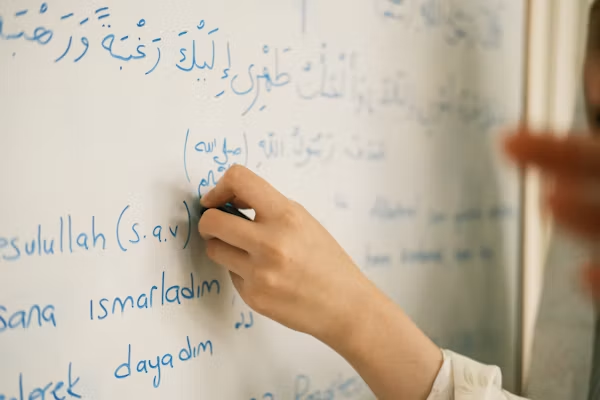
Learning Arabic independently from pre-recorded videos can lead to unchecked pronunciation mistakes. At MeeM Academia, our foundational Arabic and Quran programs are designed for learners of all ages:
- 1-on-1 Live Interactive Classes: Certified male and female instructors who guide you step-by-step with real-time feedback on your recitation and grammar.
- Noorani Qaida to Fluent Reading: A progressive syllabus taking absolute beginners from single letters to fluent Nazra reading.
- Root-Word & Vocabulary Coaching: Specially designed modules for teens, adults, and reverts to understand Quranic verses during Salah.
- Flexible Global Scheduling: Book sessions that fit your daily routine across any international time zone.
Frequently Asked Questions (FAQs)
What is the difference between Quranic Arabic and Modern Standard Arabic (MSA)?
Quranic (Classical) Arabic is the liturgical language of the Quran and classical Islamic texts. MSA is used in modern news broadcasts, formal writing, and literature. Learning Quranic Arabic focuses specifically on religious vocabulary and grammatical structures.
How long does it take for a complete beginner to read the Quran?
With consistent 1-on-1 lessons (2 to 3 times per week) and light daily practice, most beginners complete the Noorani Qaida and begin reading basic Quranic text within 3 to 6 months.
Is this course suitable for adult reverts?
Yes. Our instructors provide patient, judgment-free, private 1-on-1 tutoring tailored specifically to adult learners and new Muslims.
Start Understanding the Quran Today
Deepen your connection with the Book of Allah and bring true focus to your prayers.

0 Comments