


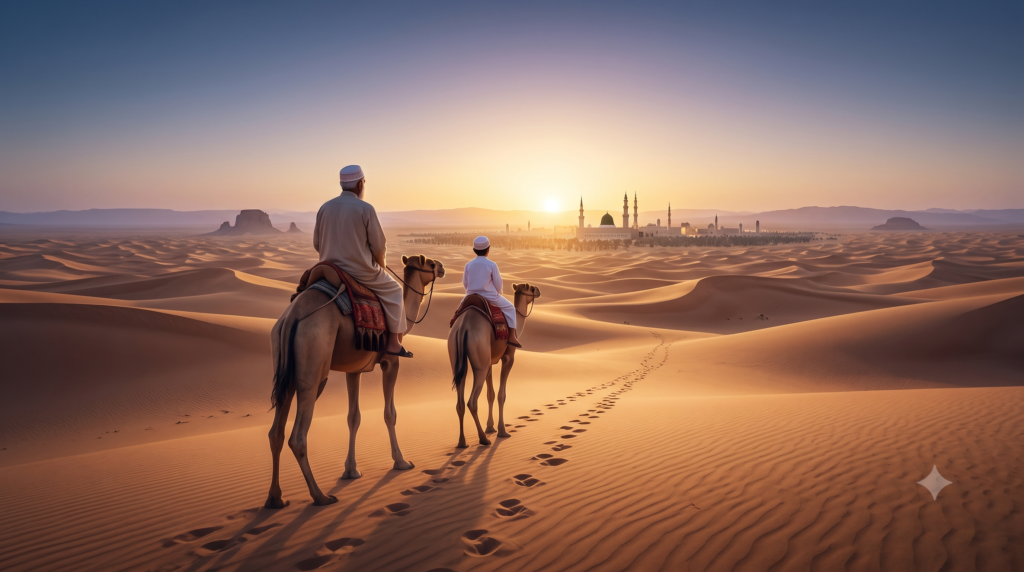
A Journey That Gave the Islamic Calendar Its First Day
Every Muharram, the Islamic calendar quietly turns to a new year — and that count doesn’t begin with a birth, a victory, or a conquest. It begins with a journey.
The Hijrah — the migration of Prophet Muhammad ⺨ and his companions from Makkah to Madinah — is the event the entire Hijri calendar is named after. Not because it was easy, but because of everything it asked of the people who lived it: courage, sacrifice, and the willingness to start over.
This is exactly why the Hijrah remains one of the most quietly powerful lessons in Islamic history — not just for understanding the past, but for facing change in our own lives today.
This blog looks at what actually happened during the Hijrah, and what it can teach both parents and children about courage, change, and starting over.
What Was the Hijra?
After 13 years of facing persecution in Makkah for spreading the message of Islam, the Prophet ⺨ and his companions were commanded by Allah to migrate to Madinah, where a community was ready to welcome and support them.
This was not a simple relocation. It meant leaving behind homes, businesses, family ties, and the only city many had ever known — walking away from everything familiar, on the strength of faith alone.
The simple explanation for kids: “The Prophet and his friends had to leave their home city because some people there were being unkind to them. Allah told them to move to a new city called Madinah, where people welcomed them with open arms.”
Lessons the Hijra Teaches Us
🧭 Lesson 1 — Courage Means Moving Forward Even When You’re Afraid
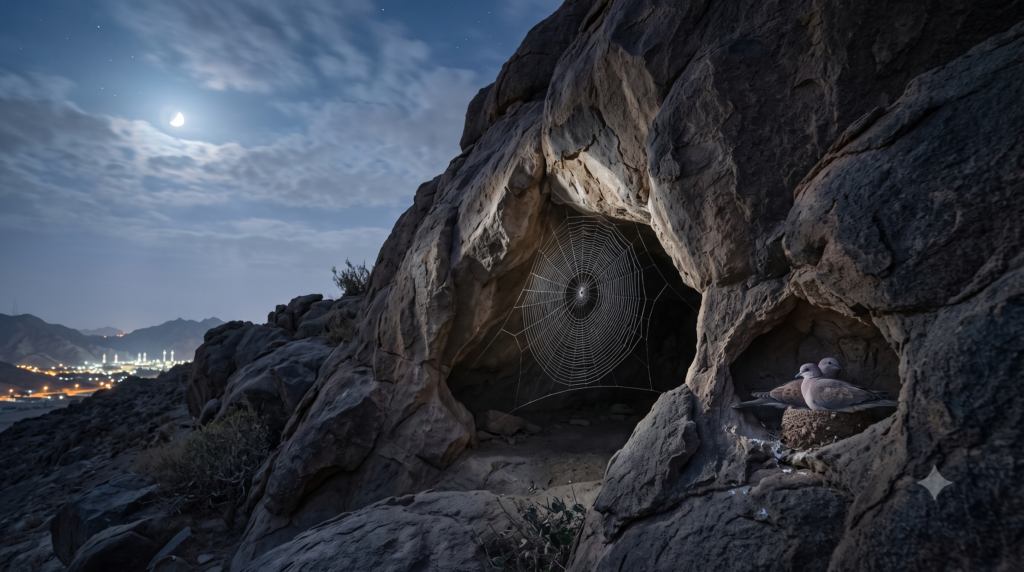
The journey to Madinah was dangerous. The Prophet ⺨ and Abu Bakr (رضي الله عنه) hid in the Cave of Thawr while search parties looked for them, trusting Allah’s protection even as danger stood at the cave’s entrance.
The lesson for kids: “Even the Prophet felt the danger around him, but he kept trusting Allah and kept moving forward. Being brave doesn’t mean we’re never scared — it means we keep going anyway.”
🧭 Lesson 2 — Letting Go of the Familiar Can Lead to Something Better
Leaving Makkah meant giving up homes, businesses, and a familiar way of life. Yet Madinah became the place where the first true Muslim community flourished and Islam took deep root.
The lesson for kids: “Sometimes leaving something familiar — a house, a school, a friend group — feels really hard. But it can also lead to something good we didn’t expect.”
🧭 Lesson 3 — A New Beginning Is Always Possible
The Hijrah marks more than a relocation — it marks the start of an entirely new chapter, one significant enough that Muslims later chose it as the starting point of their calendar.
The lesson for kids: “No matter how hard things get, a fresh start is always possible. That’s exactly why this story marks the beginning of a whole new year.”
🧭 Lesson 4 — True Friendship Shows Up When It’s Needed Most
Abu Bakr (رضي الله عنه) didn’t hesitate to risk his own safety to accompany the Prophet ⺨ on this dangerous journey, staying by his side through every uncertain moment.
The lesson for kids: “A real friend stays close during the hard times, not just the easy ones. Abu Bakr showed what loyal friendship really looks like.”
🧭 Lesson 5 — A Community Built on Welcome and Support Changes Everything
When the migrants arrived in Madinah, the local Ansar welcomed them generously — sharing homes, food, and resources, and forming bonds of brotherhood that became a model for Muslim community life ever since.
The lesson for kids: “When the Prophet and his friends arrived in a new city, the people there welcomed them like family. Being kind to someone new can mean everything to them.”
Why the Hijra Still Matters Today
Every family eventually faces its own version of a Hijrah — a move to a new city, a new school, a hard goodbye, or simply the discomfort of change. The story gives children a powerful reference point: that leaving the familiar, even when frightening, can be the very thing Allah uses to bring something better.
How to Bring This Lesson Into Your Home
- Tell the story around Muharram. Since the Hijri calendar begins with this event, it’s a natural moment each year to revisit it as a family.
- Connect it to your child’s own changes. Starting a new school year or moving house? Draw the parallel: new beginnings can be hard, but also good.
- Highlight the helpers in the story. The Ansar’s welcome is a beautiful, concrete example of hospitality and kindness children can imitate.
- Talk about the Cave of Thawr. It’s a vivid, memorable scene that teaches trust in Allah during truly frightening moments.
A Word to Parents Navigating Their Own Changes
The Hijrah wasn’t an easy chapter — it asked everything of the people who lived it. But it’s remembered today not for its difficulty, but for what it made possible afterward.
Whatever change your family is facing — big or small — the Hijrah offers a quiet reminder: starting over, with faith and courage, can lead somewhere better than where you began.
📚 Build a Lasting Connection to Islamic History With Meem Academia
At Meem Academia, we believe stories like the Hijrah shouldn’t only be heard once a year. They should be woven into a child’s ongoing Islamic education — understood, revisited, and connected to real life. Learning that fits for future.
We are not just another Islamic studies platform. We are a community of educators who bring the Seerah and prophetic history into lessons that feel relevant to a child’s everyday world.
🌟 Help Your Child Understand the Story Behind Their Calendar
This Muharram, let the Hijrah be more than a date children memorise. With the right story and the right guidance, it can become a lesson in courage they carry for life.
Enroll at Meem Academia Today → meemacademia.com
Book a free trial class. Meet your child’s teacher. Watch their love for Islamic history come alive.

0 Comments